


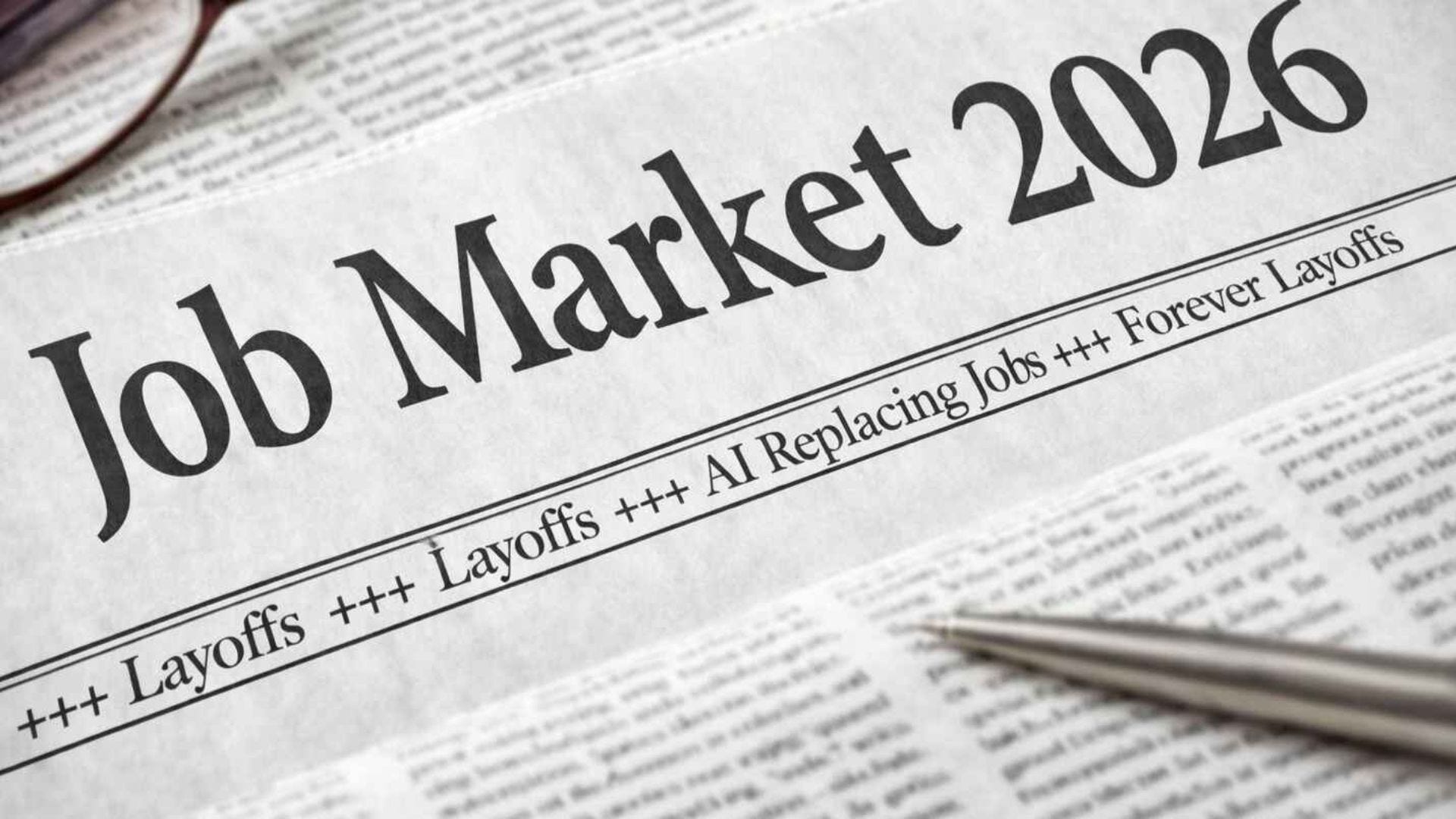
Graduation season has arrived, and the Class of 2026 is walking into the worst entry-level job market in four years. The unemployment rate for recent college graduates hit 5.7% in the fourth quarter of last year. Junior-level job postings fell 7% in 2025. Indeed’s Director of Economic Research Laura Ullrich confirmed this week that conditions have not improved: “We remain in a low-hire, low-fire environment. I think for the graduates of 2026, they enter a labor market that’s very similar to the one that their peers who graduated last year in 2025 are entering.”
Nine in ten graduates say they are worried AI will replace entry-level roles. Only one in three say college is preparing them to use AI in the workplace. That gap between anxiety and preparation is the condition graduates are walking into this month, in cities and towns across the country.
Also on Apple Podcasts
The mechanism producing that gap has a name: Economists call it the low-hire, low-fire labor market. A Truflation analysis published today names it more precisely: a frozen labor market. The Bureau of Labor Statistics reports 6.9 million job openings, layoffs unchanged at 1.9 million, and quits stable at 3.2 million. The headline unemployment rate sits at 4.3%. Those numbers look healthy. They are misleading.
AI does not need to fire workers to damage the labor market. It suppresses hiring. Companies retain existing staff while letting natural attrition shrink headcount. They do not replace the roles that open up.
Entry-level postings fall because AI absorbs the codifiable tasks those roles were built around. Quit rates fall because workers fear what is outside. The result is a labor market that produces stable unemployment statistics and simultaneously closes the door on anyone trying to enter it or move within it.
The frozen labor market is the statistical equivalent of the Ghost GDP pattern The AI Report documented in May: growth and stability at the aggregate level, real damage accumulating in the populations the aggregate cannot see.
BUY NOW! Get the NEW Book that exposes the Narratives Tech uses to build its AI Empire. $4.95 flat fee for Kindle, Nook, Tablets, and Mobile. No subscription required.3.5-hr reading time.

The April 2026 Challenger, Gray & Christmas report adds a specific data point to that picture. Job cuts rose 38% from March to April. AI was cited as a factor in a growing share of those announcements. Year-to-date cuts remain down 50% from the same period last year. That combination tells the same story as the unemployment statistics: fewer dramatic layoff events, but a labor market that is quietly contracting at the entry level and the middle while producing no alarm signal in the headline numbers.
The most advanced version of that dynamic is already visible in the United Kingdom. Morgan Stanley research shared with Bloomberg finds that UK companies which have used AI for at least a year reported net job losses of around 8% over the past 12 months. That is the steepest decline among comparable economies including the United States, Germany, and Japan. British firms report AI productivity gains estimated above 11%. Those gains have not been matched by job creation. Companies are banking the efficiency as margin.
BUY NOW! Get the book that examines how the AI invasion already happened. You just weren’t invited. $9.95 flat fee for Kindle, Nook, Tablets, and Mobile. No subscription required. 2-hr reading time.

The UK data is the leading indicator for where the United States is heading. British companies are further along the AI adoption curve. They have restructured around the technology.
The result is net job loss, not neutrality, and productivity gains that flow to shareholders rather than to the workforce that generated them.
The Class of 2026 is not graduating into a labor market that is collapsing. The unemployment statistics will confirm that next month. They are graduating into a labor market that has stopped expanding at the level where they were supposed to enter it, for reasons that will not show up clearly in any single data release.
The frozen labor market does not fire people. It simply freezes new ones out.


